Custom PU Foam Parts for Seats, Saddles & Cushioning
ChiZe reviews independent custom high-resilience polyurethane (PU) foam parts for seats, saddles, cushions and supports, including saddle padding. Start with the intended use, shape, dimensions and reference sample.
Explore the shapes and profiles of ChiZe foam components. Use a photograph, drawing or physical sample to explain the part you need.
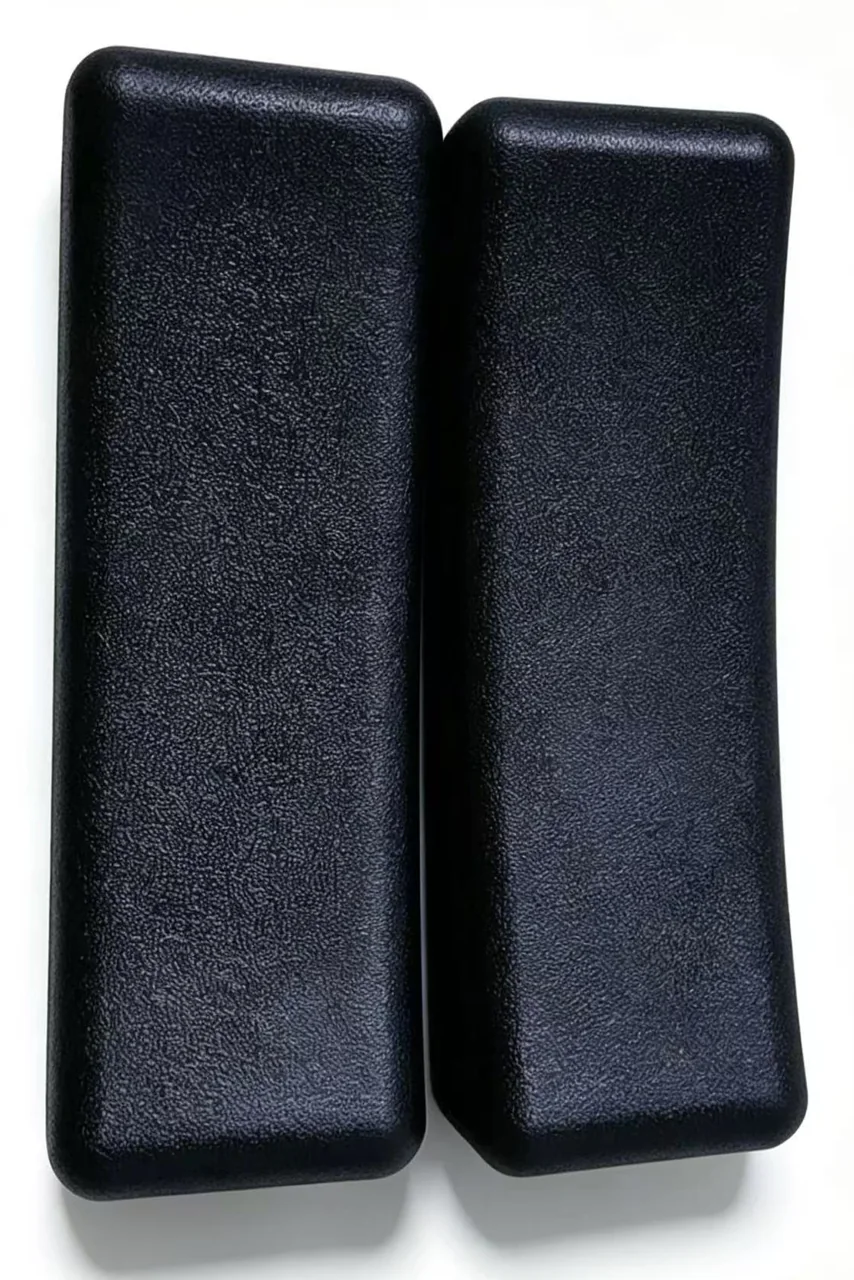
Armrest pads
Compare the outline and contact surface with your armrest support. Share the required length, width and surrounding assembly.
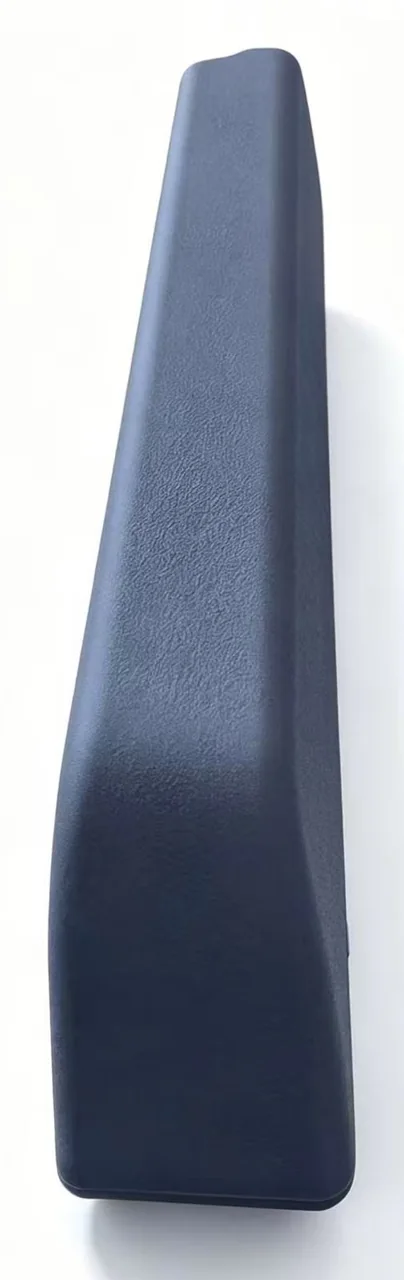
Armrest side profile
Define the thickness and profile along the part, including the surfaces that must fit against the support.
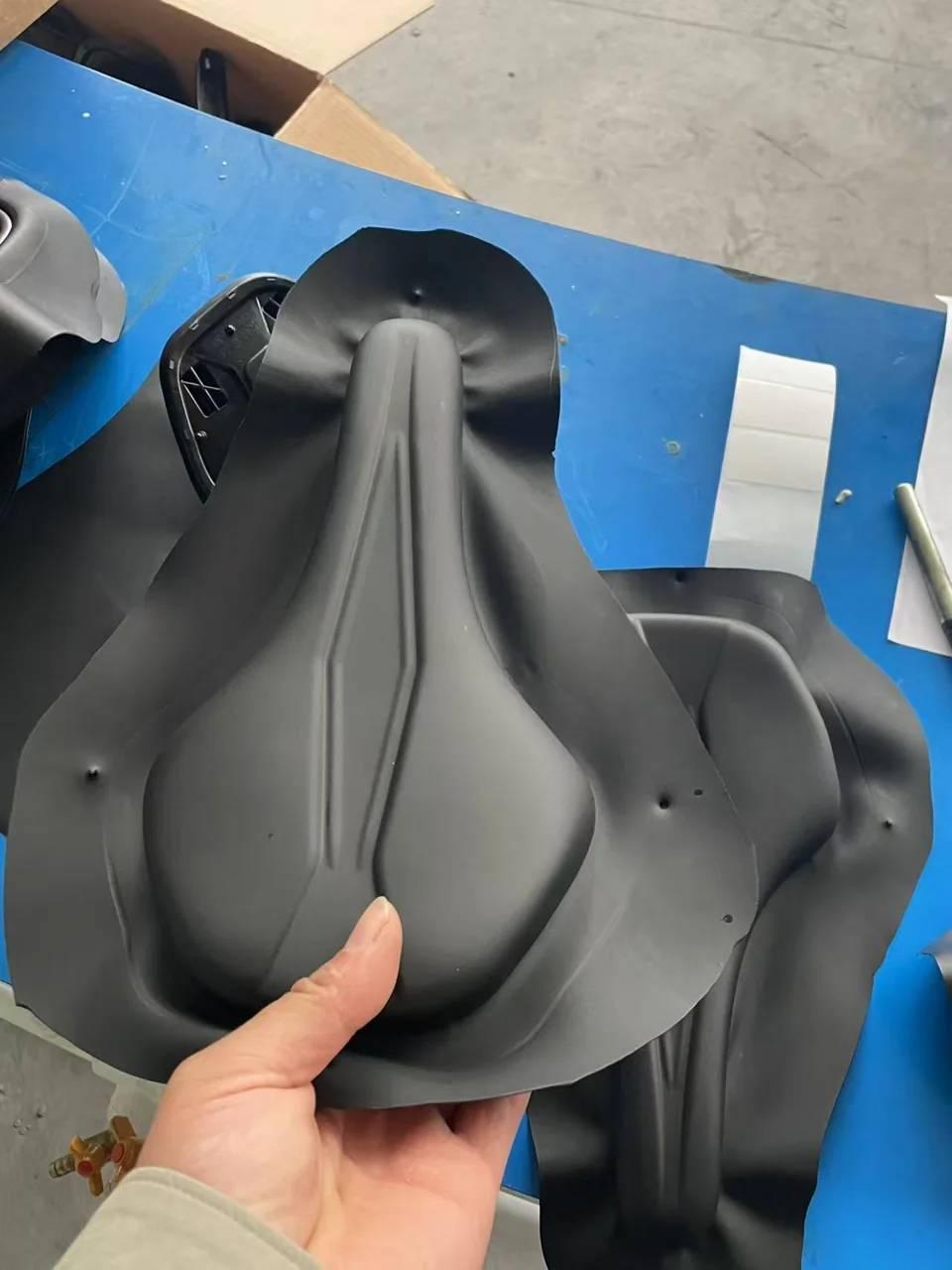
Saddle foam after demoulding
Shown after demoulding, before edge trimming. Review the contour with the intended seat base and cover, and specify foam-only or complete-saddle supply.
Final dimensions, feel and fit are agreed for your project through drawing and sample review. Discuss a similar foam part →
Application Examples
Pillow, seat and lumbar support cores
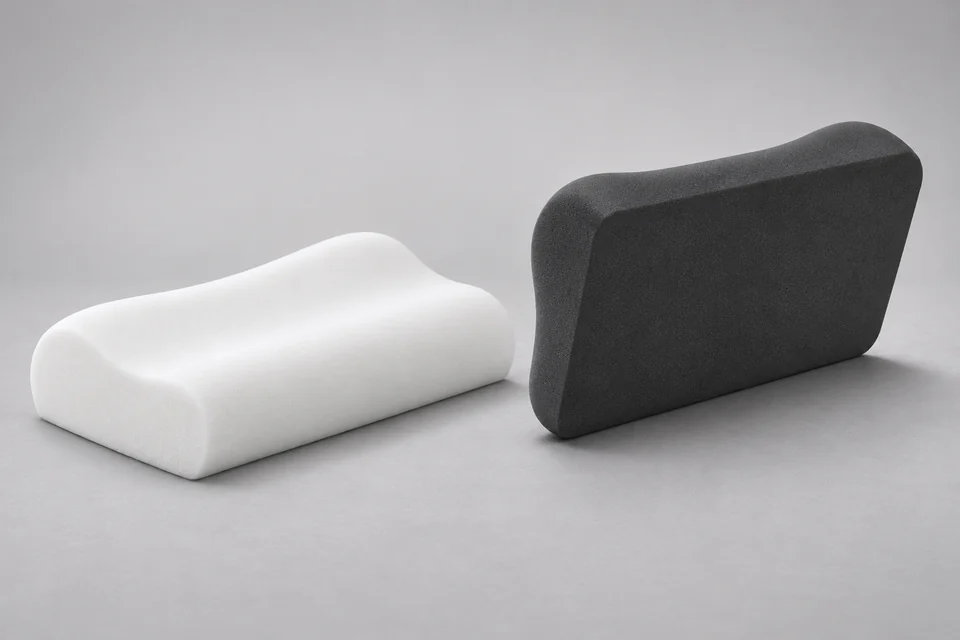
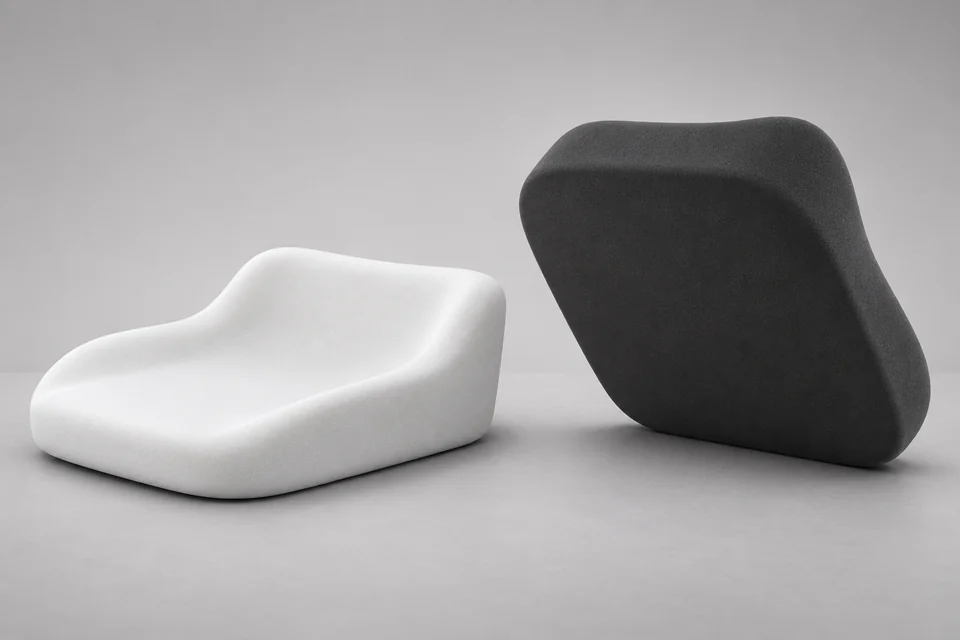
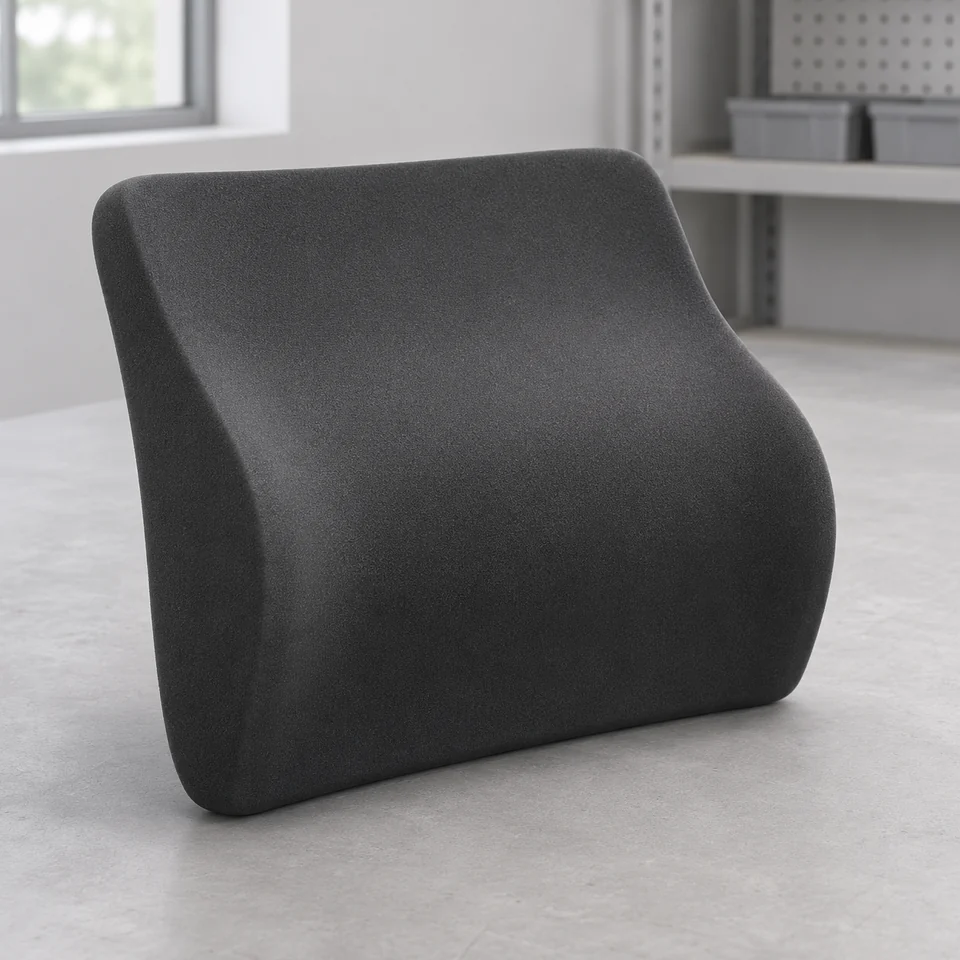
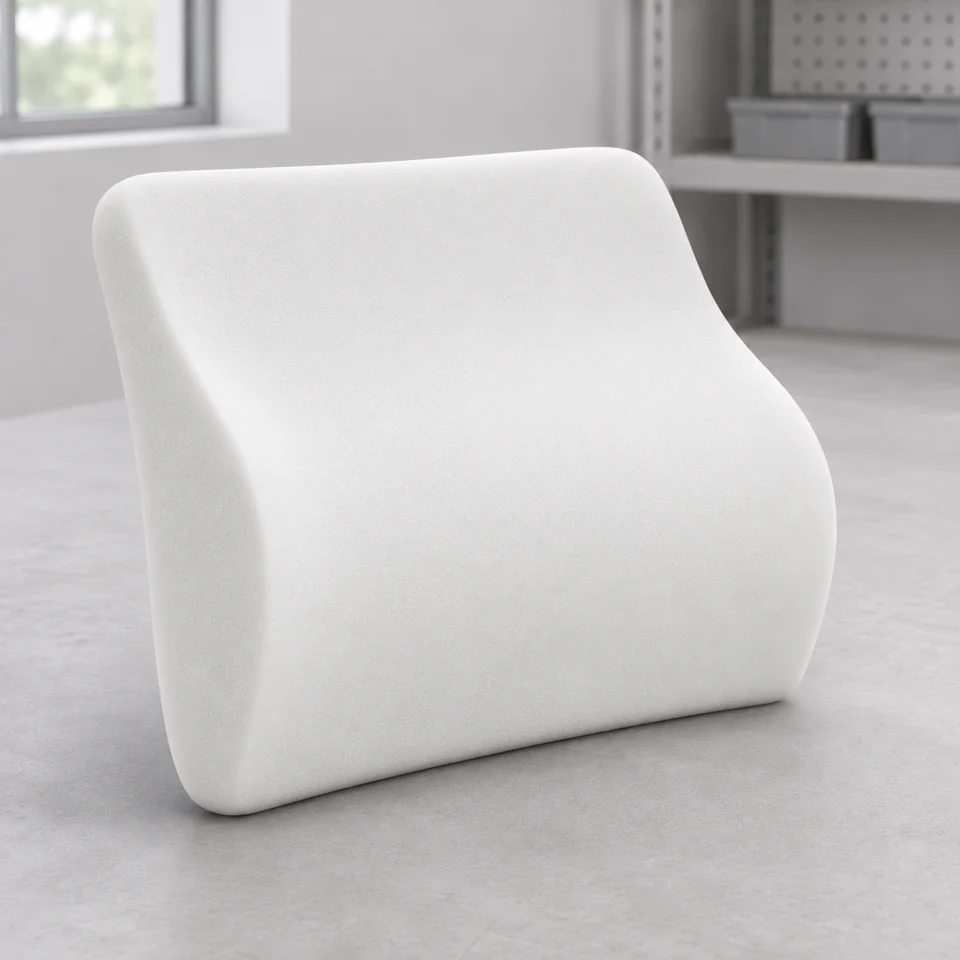
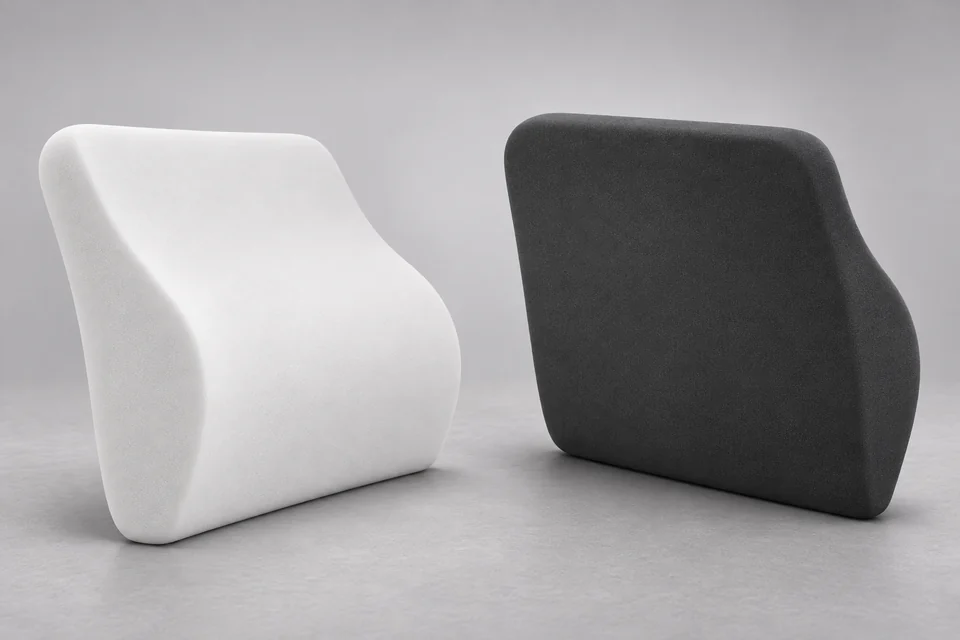
Black and white concept illustrations show component shapes, profiles and contact surfaces. Use the dimensions and sample-review notes below to prepare your own brief. Final geometry, color, material targets and fit are agreed through drawing and sample review.
Black exampleWhite example
01
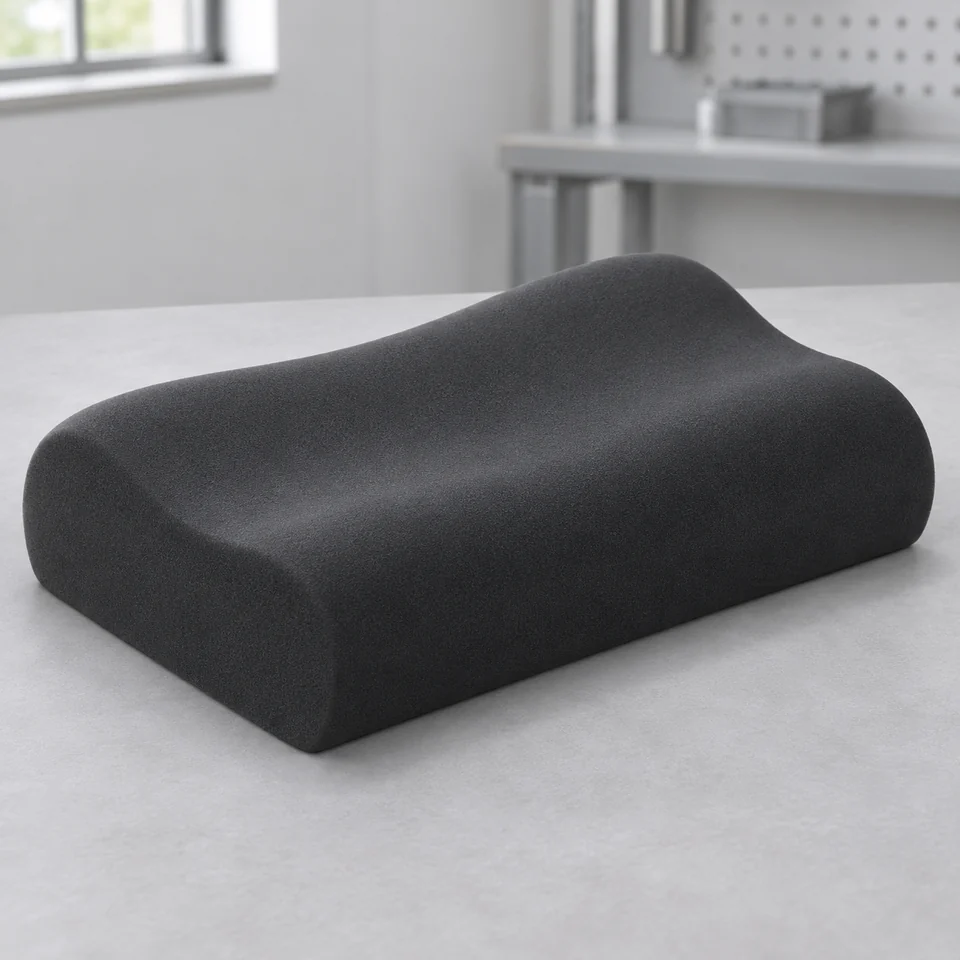
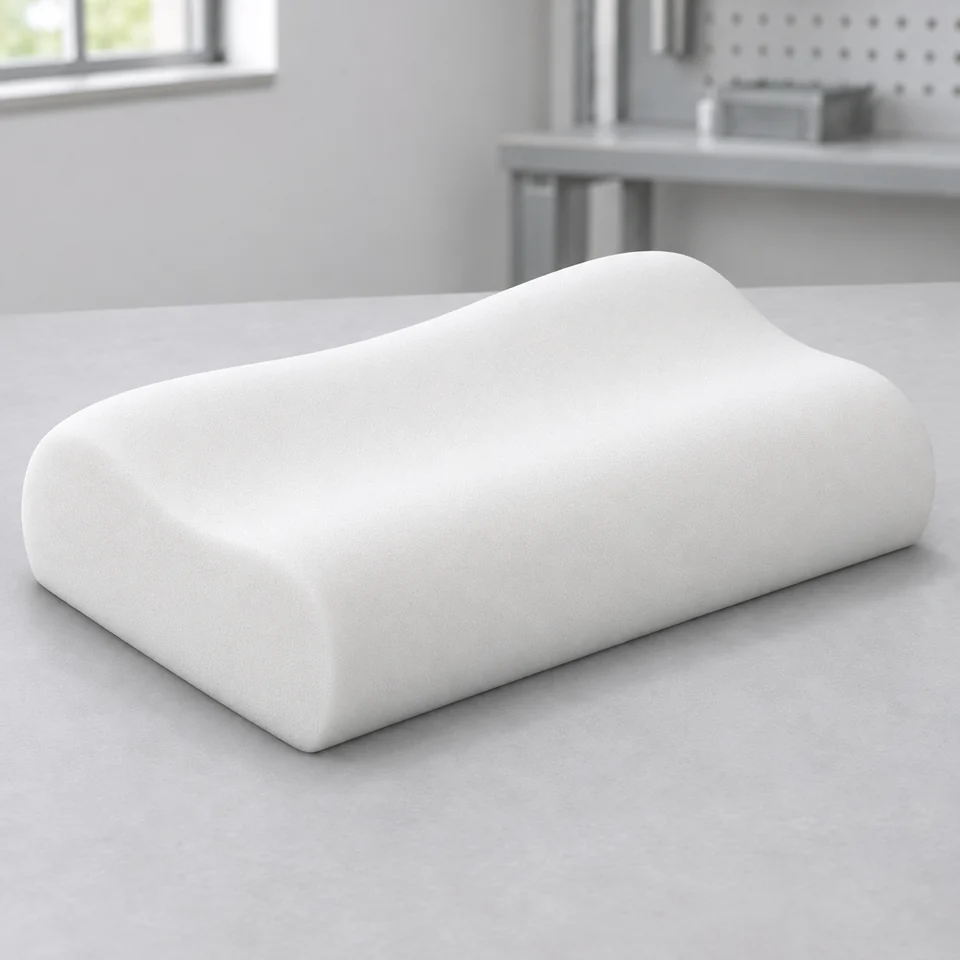
Pillow core
An illustrative shaped PU foam core for a pillow application. Review the finished outline, thickness, cover or assembly relationship and the support feel you want to achieve.
Overall length and width, plus the height at each raised edge and at the center trough. Include units and mark the measurement points on your drawing.
Assembly reference
The intended pillow cover, seam allowance and any insert that shares the cover.
Sample checks to agree
Compare the outline, edge profile and cover fit with the agreed reference. Review support feel with the intended cover in place.
Black exampleWhite example
02
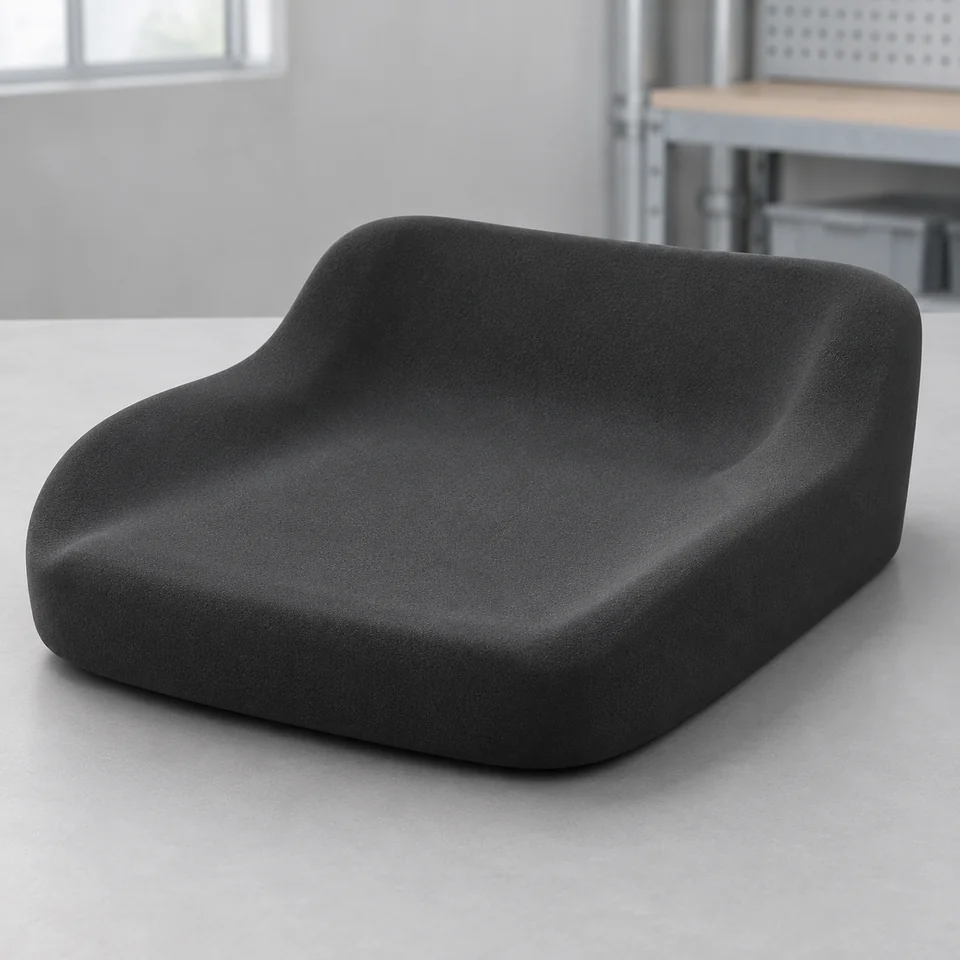
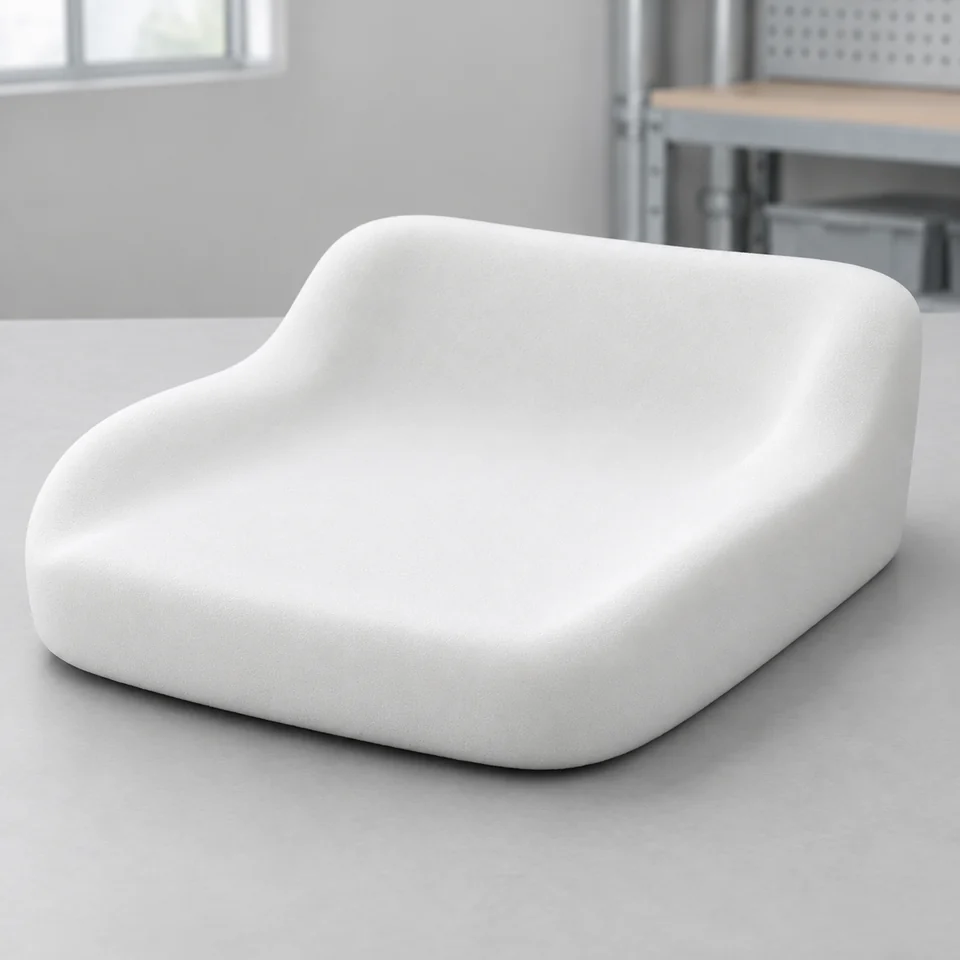
Seat core
An illustrative shaped foam insert for a seat or cushion application. Confirm the base or seat-pan interface, thickness transitions, cover allowance and whether the request is for foam only or a complete assembly.
Overall width and front-to-back depth, plus thickness at the front, center and rear. Include units and mark the measurement points on your drawing.
Assembly reference
The seat pan or base, cover allowance and any openings or clearance features in your drawing.
Sample checks to agree
Check contact with the base, contour transitions and cover fit. Evaluate the sample on the intended support and specify foam-only or complete-seat supply.
Black exampleWhite example
03
Lumbar support core
An illustrative contoured foam core for lumbar support. Confirm the support contour, mounting or cover relationship, target position and pressure or feel reference against the surrounding backrest.
Overall width and height, maximum forward projection and the profile at the contact face. Include units and mark the measurement points on your drawing.
Assembly reference
The backrest surface, cover and intended support position within the surrounding assembly.
Sample checks to agree
Compare the support contour, rear contact and cover fit with the agreed reference. Evaluate position and feel in the intended backrest assembly.
Use the closest example as a starting point, then share the dimensions, fit references and required quantity for your own part. Discuss an application →
Supply Scope
Start with the part
Choose the closest starting point. Your inquiry can be for an independent foam component or the filling used within a saddle.
01 / Independent component
A custom foam part
Define the part’s shape, thickness, contact surfaces and intended use. Include the surrounding assembly or support surface where it affects the fit.
Describe the foam contour, thickness and desired feel alongside the shell or seat pan and cover. Identify whether your order is for the foam alone or a complete saddle project.
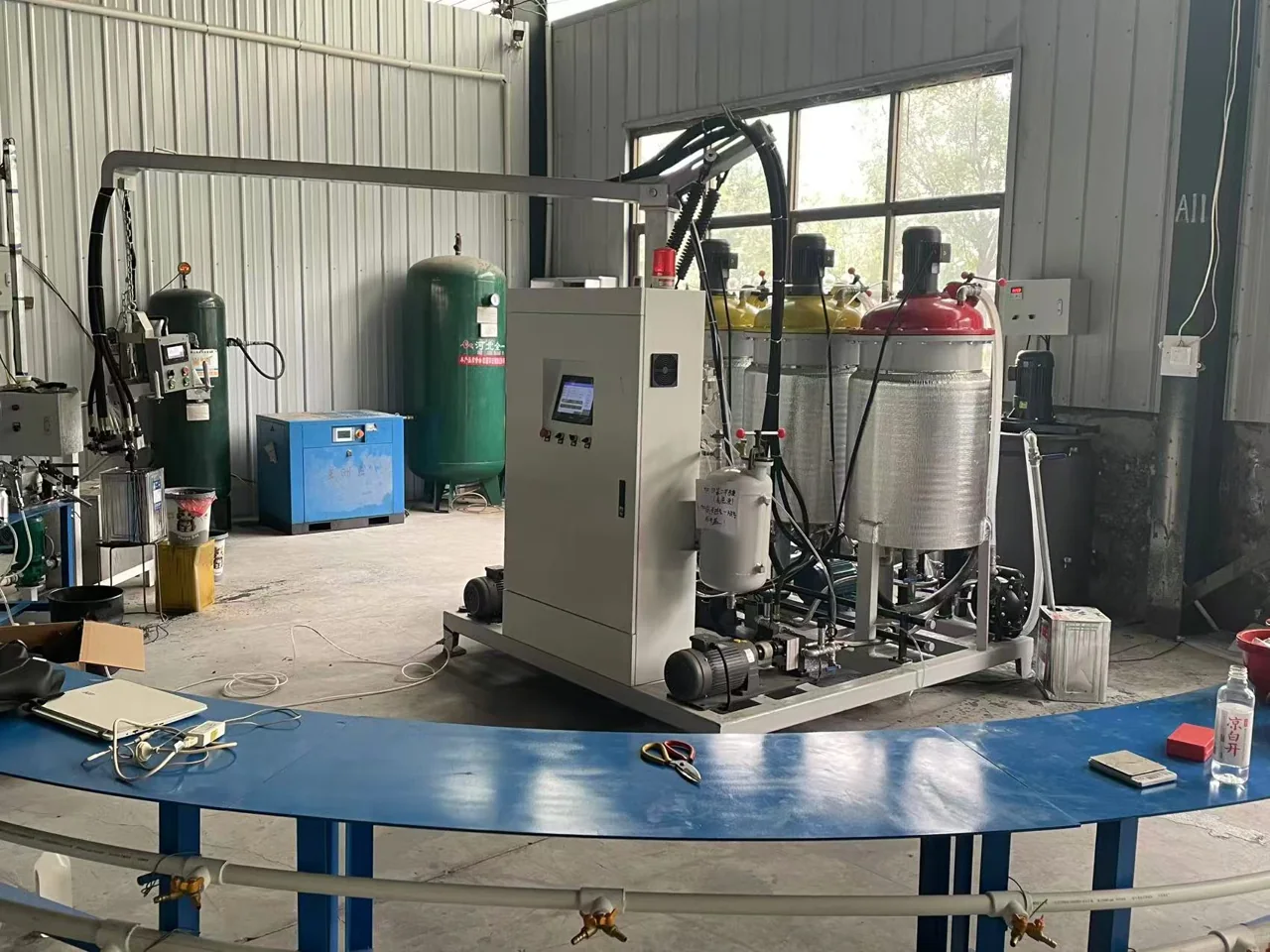
This short view of ChiZe’s workshop moves from the dispensing area to the control cabinet and material tanks. The photograph shows the equipment and surrounding work area.
Foaming equipment and material tanks at ChiZe.
Workshop equipment · 10-second video, without audio.
Your Project Brief
What to share
A drawing or sample gives the discussion a clear reference. Start with what you have; material targets and technical details can be developed through the project review.
Identify critical dimensions, fit surfaces, appearance and the target feel. If your project needs measured density, hardness, rebound or other performance results, agree the method, conditions and acceptance limits before testing.
For saddle filling, review the foam with the intended base and cover as well as on its own. Keep foam-part requirements separate from the fit and performance requirements of a complete seat.
Mass per unit volume, commonly stated in kg/m³. Record it separately from the firmness requirement.
Firmness / IFD
The force needed to indent a sample to a stated proportion of its thickness. Include the method, units and specimen conditions with a result.
Resilience
Often evaluated by ball rebound. State the method and sample conditions when requesting a measured result.
For saddle padding, also compare the foam with its intended base and cover. Use the material specification checklist to keep the part, test specimen and acceptance requirements together.
Buyer Questions
Before your inquiry
Can I order the foam part separately?
Yes. ChiZe handles custom high-resilience polyurethane foam parts as independent components, including foam padding for saddles. Specify the part you need and any components that you will supply or assemble separately.
Do I need a finished drawing?
You can start with the intended use, approximate dimensions, photographs or a reference sample. Identify the details still to be agreed so the next drawing or sample can address them.
What if I do not know the density or hardness?
Describe the feel and support you want and identify a comparison sample if available. Numeric material targets are optional in the initial inquiry; agree the final specification and acceptance method during sample review.
Does higher density mean firmer foam?
No. Density and firmness describe different properties. Specify the desired feel separately from density, and identify the test method and sample conditions when comparing measured values.
How are sample cost and order quantity agreed?
The quotation considers the part geometry, specification, requested sample work, quantity and packing. Ask for sample costs, any tooling required, unit price and timing to be identified for your project.
Discuss Your Foam Part
Tell us the intended use, shape, available reference and quantity. Mention drawings or photos for follow-up by email.