
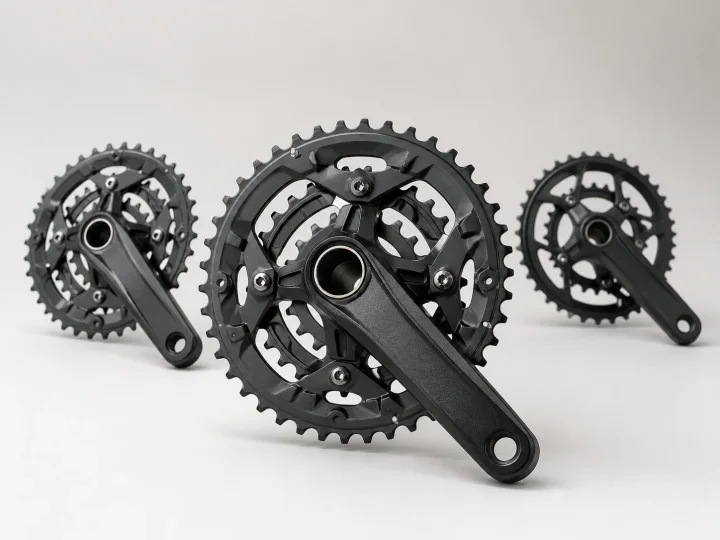
A useful bicycle crankset RFQ defines the complete bicycle interface, not only a model code or chainring tooth count. The buyer should establish the application, chainring construction, crank geometry, spindle or bottom bracket interface, chainline, speed system, clearance and commercial requirements before requesting a production quotation.
This guide applies to the ChiZe crankset, crank arm, chain guard, cover and spider catalog. Published catalog values are starting references. Final compatibility and production requirements remain controlled by the approved drawing, sample and order specification.
Minimum Crankset RFQ Inputs
An initial RFQ should include:
- Bicycle type and intended use.
- Front chainring count and required tooth combination.
- Crank length and material.
- Chainring material and replaceable or fixed construction.
- Bottom bracket or spindle interface.
- Required chainline and BCD where applicable.
- Rear speed system and chain reference.
- Chain guard, cover or spider requirements.
- Finish, branding and packing scope.
- First order quantity, annual volume and target market.
- Drawing, current component model or physical sample status.
Missing fields should be marked for confirmation rather than inferred from a similar-looking crankset.
1. Define the Bicycle Application
Start with the vehicle and drivetrain architecture.
| Input | Buyer information to provide |
|---|---|
| Bicycle platform | MTB, road, city, folding, junior, cargo, e-bike or another application |
| Riding use | Performance, commuting, utility, delivery, fleet or replacement |
| Wheel and frame context | Wheel size, frame clearances and any chain-case or battery constraints |
| Front drivetrain | Single, double or triple chainring |
| Rear drivetrain | Number of rear speeds and chain specification |
| Existing system | Current crankset, bottom bracket, derailleur and rear drivetrain references |
The same tooth count can appear in products intended for different chainlines, speeds, materials and interfaces. Application data prevents a superficial model match.
2. Specify the Chainring Package
State the complete chainring requirement:
- Tooth count or combination, such as single 42T or triple 22/32/44T.
- Chainring material.
- Number of rear speeds the configured system must support.
- BCD and replaceable-chainring requirement where applicable.
- Spider construction and mounting geometry.
- Guard coverage, ring, cover or chain-case interface.
- Required color and visible finish.
Do not infer speed compatibility from tooth count. The tooth profile, spacing, chainline and mating drivetrain must be reviewed as a system.
3. Define Crank Geometry and Interfaces
| Field | What to confirm |
|---|---|
| Crank length | Required center-to-center length and any left/right difference |
| Crank material | Forged aluminum, steel, coated steel or another approved construction |
| Spindle interface | Square, splined, integrated or another drawing-defined interface |
| Pedal interface | Thread and side identification |
| Q-factor or clearance | Frame, chainstay, motor, cover and rider-clearance requirements |
| Surface finish | Paint, powder coat, anodizing, polishing or another controlled finish |
The buyer should provide interface drawings or representative mating components whenever fit cannot be established from controlled dimensions alone.
4. Confirm Chainline and Bottom Bracket
Chainline and bottom bracket selection are connected. A crankset cannot be approved independently of the spindle or bottom bracket position that creates the required chainring location.
The RFQ should state:
- Target chainline.
- Bottom bracket shell width.
- Bottom bracket or spindle model and interface.
- Required spindle length where applicable.
- Frame and chainstay clearance.
- Front derailleur relationship for multi-chainring systems.
Shimano’s official compatibility information publishes crankset, bottom bracket and chainline together rather than as independent selections. This is a useful example of why an OEM RFQ must treat them as a system. See Shimano crankset, bottom bracket and chainline compatibility. That source describes Shimano systems; it is not evidence of ChiZe compatibility.
5. Separate Reference Data from Approval Data
| Data class | Typical use |
|---|---|
| Catalog model and image | Establish a product-family starting point |
| Published specifications | Identify available chainring, crank and interface references |
| Buyer drawing | Control fit-critical dimensions and mating interfaces |
| Physical sample | Compare construction, appearance and assembled fit |
| Approved specification | Control materials, finish, supplied parts and inspection criteria |
| Approved sample | Establish agreed appearance and assembly reference |
Do not treat a catalog image as a compatibility certificate. Send the mating dimensions, drivetrain speed and required configuration so the crankset can be matched to your bicycle before quotation.
6. Define Validation and Inspection
The buyer and supplier should agree which checks apply to the configured assembly. Depending on the project, review points may include:
- Critical dimensions and interface gauges.
- Chainring runout and crank alignment criteria.
- Fastener and assembly requirements.
- Finish, color and logo position.
- Guard clearance and attachment.
- Trial assembly with representative mating parts.
- Packaging protection and mixed-model identification.
- Buyer-required performance or market-specific validation.
Acceptance criteria must identify the configured model, revision, sample or drawing and test basis. Generic claims should not replace project-specific evidence.
7. Prepare a Comparable Commercial RFQ
Include the same commercial scope when comparing quotations:
- Complete crankset, left/right arms or component-only supply.
- Chainrings, guards, covers, fasteners and bottom bracket inclusion.
- Tooling and fixture scope.
- Branding and packaging.
- Sample quantity and approval stages.
- First order and annual quantity.
- Delivery destination and trade basis.
- Required inspection records or reports.
A low price may reflect an incomplete assembly scope. Record every buyer-supplied and supplier-supplied item before comparison.
Frequently Asked Questions
What is the minimum information for a bicycle crankset RFQ?
Provide the bicycle application, crankset type, chainring tooth count, crank length, crank and chainring material, bottom bracket or spindle interface, chainline target, speed system, guard requirement, quantity and target market.
Can a crankset be selected from tooth count alone?
No. Tooth count does not establish chainline, bottom bracket fit, crank clearance, front drivetrain compatibility, chain guard geometry or the complete bicycle interface.
Why does chainline need to be stated?
Chainline positions the chainring relative to the rear drivetrain and frame. It must be reviewed together with the crankset, bottom bracket or spindle and bicycle layout.
Should a buyer provide an existing component model?
An original component model, drawing or approved physical sample can provide useful reference data, but the required interfaces and permitted substitutions must still be stated explicitly.
What should be approved before mass production?
Approve the configured model, dimensions, interfaces, chainring and crank construction, finish, branding, guard, fasteners, inspection criteria, packaging and controlled sample or drawing.